




Myofascial technique course
There is a tissue in the body that holds everything together. It envelops the muscles, connects the organs, absorbs tension and tells the story of the person inhabiting that body. It is the fascia. Working with it using your hands is neither a fad nor a trend: it is a return to what the skin and tissues have always needed – attention and guidance.
Myofascial technique is precisely this: a dialogue between your hands and your client’s myofascial system, consisting of slow pressure, precise directions and active participation. A practice that places manual skill at the centre in a market that is racing towards machinery.
What is myofascial therapy and why does it focus on the body?
To understand myofascial therapy, we need to start with the name. ‘Mio’ comes from the Greek and means ‘muscle’. Together with the fascia (the connective tissue that envelops every muscle fibre, every organ and every structure in the body), the muscle forms what we refer to, in anatomical and functional terms, as the myofascial system.

If the muscle is the engine behind every movement, the fascia is its transmission system. Without it, the body cannot communicate with itself. This is why myofascial massage has significance that goes beyond mere aesthetics: working on this system means improving mobility, circulation and tissue quality and, consequently, the appearance of the skin and the contours of the face and body.
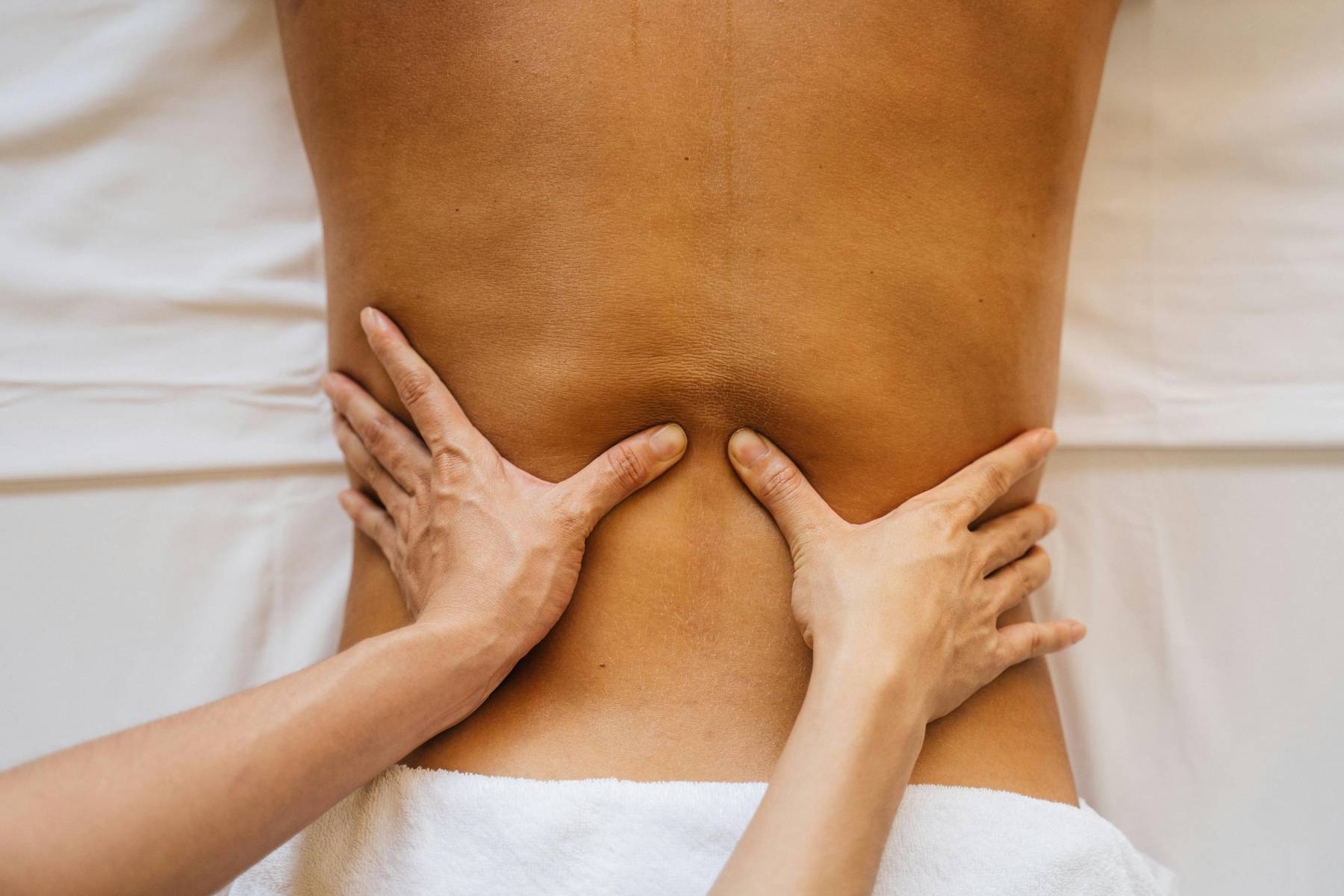
The technique is performed using deep, slow pressure, following specific directions. The client does not simply undergo the treatment: they participate, accompanying the movement and providing feedback to your hands.
The fascia, the tissue of dynamic balance
The fascia is the tissue of dynamic balance: it holds together what moves, distributes tension, and allows the body to function as an integrated system rather than as a collection of separate parts.
When it loses elasticity, everything changes: posture stiffens, drainage slows down, the skin loses tone, and contours become heavier. Even pain (the kind your client tells you about in their shoulders, neck or buttocks) very often does not originate in the muscle, but in the fascia that surrounds it.
This is why fascial massage is an invaluable tool in your salon practice. It allows you to read the body even before treating it, to understand where energy flows and where it becomes blocked, where it needs to be released and where it needs support. Myofascial therapy is not just another treatment on your menu: it is an approach that changes the way you view your client’s body.
This is where the core of the Max Pier Method comes into play: interpreting every imperfection as a message from the body and using manual techniques to respond to that message. This is neither esotericism nor an alternative approach: it is about recognising that the human body is a psychophysical unity and that the tissues reveal what words cannot express.
During the course, you will explore the psychosomatic mechanisms which, starting from the biological significance of the fascia, alter its physiology. You will understand why certain areas always become blocked in the same people, why some tensions return after every treatment, and why certain manual techniques work whilst others do not. It is a shift in perspective that translates into practical holistic manual techniques, grounded in biology, anatomy and clinical observation.
Pressure, directions and Gua-Sha: how to perform the technique
The fascial technique is performed using slow, deep pressure, sometimes with the aid of a Gua-Sha tool, following specific directions dictated by the anatomy of the fascia and an assessment of the body.
Slowness is what allows the tissue to respond without defending itself: fast pressure triggers a reaction, slow pressure invites dialogue. The directions are equally important. You do not ‘massage’: you follow a path that works on the lines of tension, the planes of glide, and the fascia’s anchor points. In some situations, the client actively participates in the movement, engaging the muscles whilst you work on the tissues.
The Gua-Sha is used as an extension of the hand, not as a decorative tool. Held and positioned correctly, it allows you to work with a depth and precision that the fingertips alone cannot achieve, and it is a tool that, during the course, you will learn to use professionally.
What will you learn on the Max Pier myofascial technique course?
The Max Pier myofascial techniques course is designed for beauticians who wish to move beyond standardised protocols and develop a distinctive, well-founded and personal approach to manual therapy. You will learn:
- The functional anatomy of the fascia and the myofascial system, explained in a clear and practical way.
- The psychosomatic mechanisms that alter tissue physiology and how to recognise them in the client’s body.
- The practical execution of the technique: pressure, directions, rhythm, and the client’s active participation.
- The professional use of Gua-Sha as an extension of your hand.
- How to integrate the technique into the face and body treatments you already offer in your salon.
This course is suitable for beauticians who already have basic training and wish to take the next step, working with a tool (their hands) that no machine can replace. By the end of the course, you will have a distinctive method to offer your clients and a new understanding of the body at work.
Turn your hands into a tool for listening
Myofascial technique is neither a passing fad nor just another protocol to learn. It is a way of working in the treatment room that brings out what sets you apart: the sensitivity of your hands, your ability to listen, and your relationship with the client.
If you’d like to know the dates, programme and how to register for the next myofascial technique course, please get in touch: our team is on hand to tell you about the course and help you decide whether now is the right time for you.
Frequently asked questions about the course
Here are the questions we are most frequently asked by beauticians interested in the course.
- What is the difference between myofascial technique and classic massage? Classic massage focuses primarily on muscle chains using techniques to relieve tension, release blockages or promote relaxation. Myofascial technique, on the other hand, works on the myofascial system as a whole: slow pressure, precise movements along the lines of the fascia, and active participation by the client. The aim is not to ‘loosen the muscle’, but to restore balance to the connective tissue surrounding it, with benefits for mobility, posture and skin quality.
- Who is the Max Pier myofascial technique course aimed at? The course is designed for beauticians with a solid foundation of training who wish to expand their technical repertoire with a distinctive and well-founded approach. No specific prior knowledge of psychosomatics is required: during the course we will build the theoretical foundations together, starting with the functional anatomy of the fascia. If you are already working in a salon and want a method that sets you apart, this course is for you.
- Is the myofascial technique suitable for all clients? The technique is suitable for a wide range of clients, but there are situations in which it should be adapted or avoided, such as in the presence of specific medical conditions, acute inflammation or pregnancy. During the course, we will cover the indications and contraindications of the treatment, so that you can confidently assess each client before proceeding. The ability to read the body is an integral part of the training.
- Can I incorporate Gua-Sha into my practice even without the course? Gua-Sha is a tool, but on its own it is not enough. Without training in the directions of the fascia, appropriate pressure and reading the tissue, you risk using it merely for decorative purposes or, worse still, causing discomfort to the client. The course teaches you to integrate it as an extension of the hand within a structured technique, not as an isolated accessory.
- How does the myofascial technique relate to the Max Pier Global Method? The Global Method combines psychosomatics, manual training and natural phytocosmetics. Myofascial technique is one of its most tangible expressions: it works on the tissue that first registers emotional and physical stress, restores its balance through manual therapy, and integrates naturally with Max Pier’s professional products. It is a key part of our approach to well-being.
