




Plantarflexion massage course
The foot tells the story. This is not a metaphor; it is the principle on which plantar reflexology is based – a technique that combines reading the body with hands-on treatment through a single point of access. The foot, like a control panel, reveals the balances and imbalances of the person in front of you. Understanding this means working in depth, not just on the surface.
This course is designed for beauticians who wish to expand their skills with a technique that goes beyond relaxation. We will guide you in discovering what plantar reflexology massage is, how it works, why it differs from other techniques, and what value it can bring to your salon.
What is plantar reflexology massage?
Foot reflexology is a manual technique that works on the feet according to a specific principle: the organs, structures and tensions of the entire body are reflected on the surface of the feet. Working on the feet therefore means working on the body, through a channel that allows one to both listen and intervene.
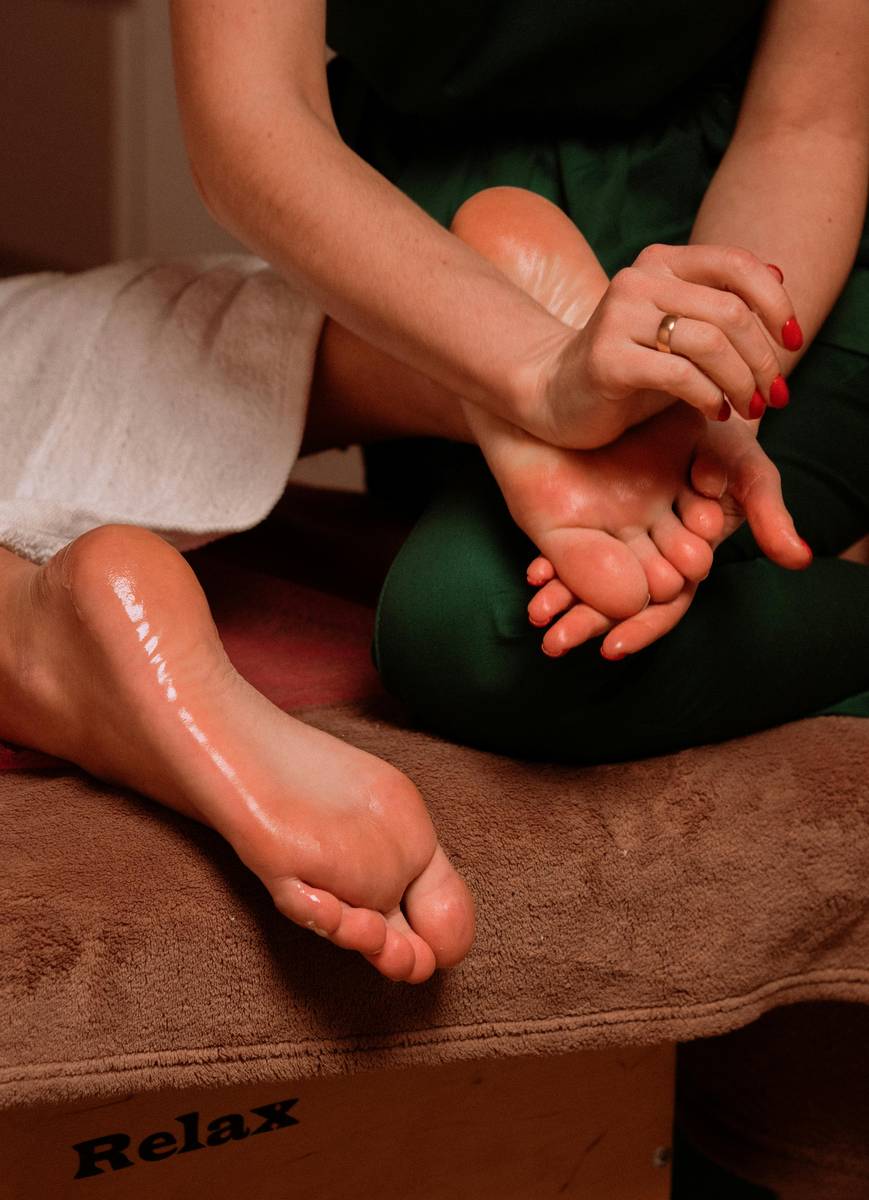
Unlike a standard foot massage designed for relaxation, plantar reflexology has a dual nature: it is both an interpretative technique (because it interprets) and a practical technique (because it acts). It is this combination that makes it a valuable tool for those who wish to offer a treatment that goes beyond immediate well-being and forms part of a broader course of care.
The foot as a map: the interpretative dimension
Everything that happens in the body’s deep tissues is reflected in the foot. Classical foot reflexology focuses on the reflex points corresponding to the organs; plantar reflexology massage adds a broader interpretative dimension, taking into account colour, temperature, tissue consistency, tension and asymmetry.
This assessment is not a clinical diagnosis, but a professional observation that guides the choice of treatment. If you notice a particularly reactive area, a change in tissue tone, or a cold spot where others are warm, you are already gathering information that will guide your subsequent manual techniques. The foot tells you what the body is asking for: it is up to you to respond with the right techniques.
How it works: at the fascial level and the energetic level
According to the plantar reflexology approach, one must work on two levels simultaneously.
- The first is the fascial level: by working on the tissues of the foot, changes are produced in the corresponding reflex zone of the body, via the myofascial connections that run throughout the entire body. It is a physical mechanism that is observable and reproducible.
- The second is the energetic level, understood not in an esoteric sense, but as the set of self-regulatory processes that the body initiates when stimulated at specific points. Stimulating these points helps the system to regain its balance.
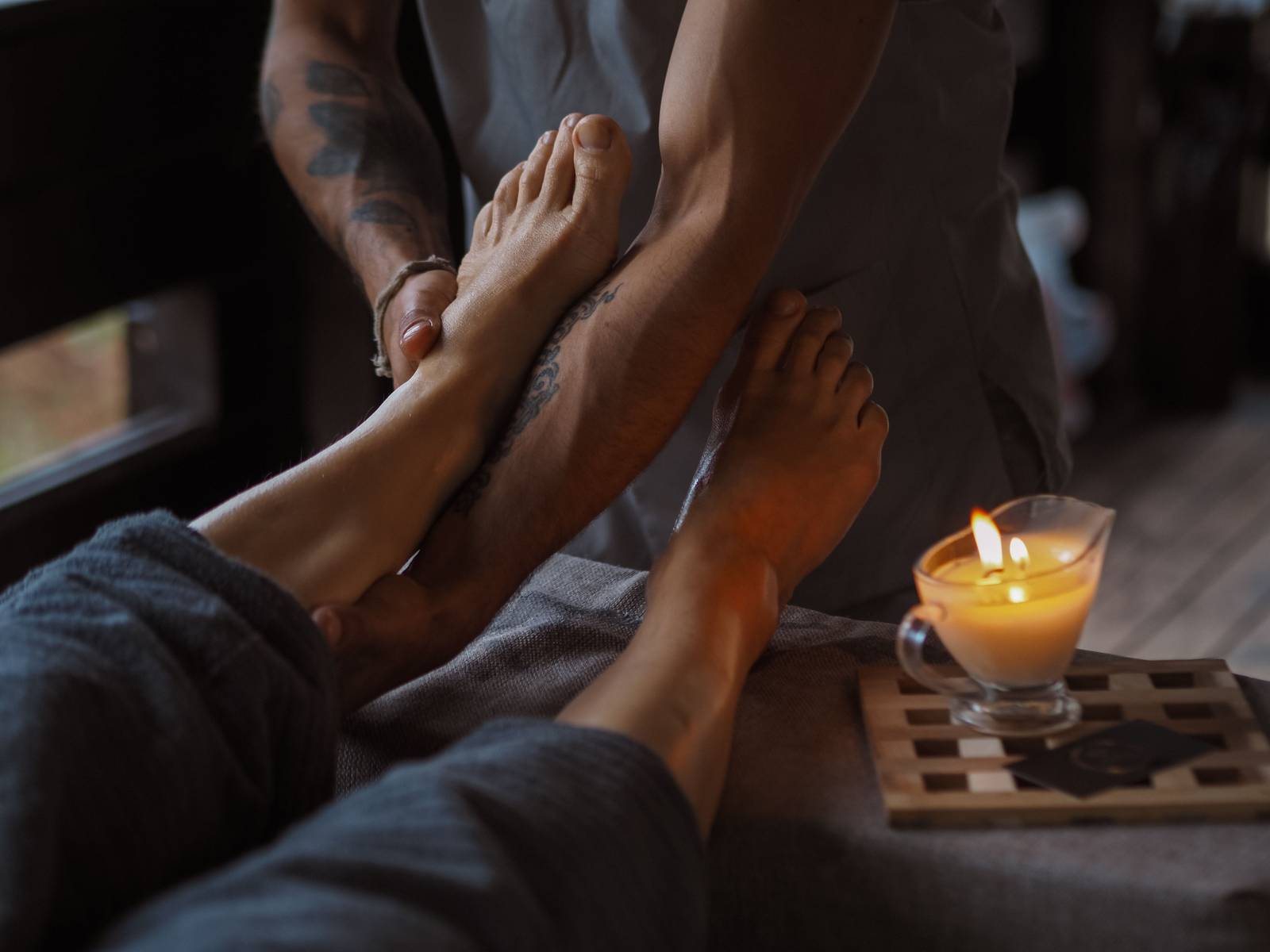
Of all the foot massage techniques, plantar reflexology is the one that systematically combines both aspects, rather than focusing solely on relaxation. Plantar reflexology is a means of promoting well-being, not a medical treatment.
Plantoreflexology, shiatsu, reflexology: what’s the difference?
Shiatsu foot massage works on the energy meridians of traditional Chinese medicine, applying pressure with the thumbs along specific lines. Chinese foot massage follows the same cultural framework, focusing on acupressure points. Western foot reflexology, on the other hand, maps the organs onto the foot and stimulates them using pressure and gliding techniques.
Plantar reflexology integrates elements of these disciplines, but reinterprets them through a different lens: psychosomatics and the holistic observation of the person. It does not simply press a point for an organ; it listens to what the foot is telling us at that moment, in that session, with that client. It is a method, not just a protocol. This is the difference your clients will sense, even without being able to put a name to it.
Foot reflexology in the work of a beautician
For a beautician seeking to establish a distinctive professional identity, plantar reflexology massage offers three concrete benefits.
- A unique skill that few colleagues possess.
- A diagnostic tool that allows you to personalise body treatments, because what you observe on the foot suggests where and how to work on other parts of the body too.
- A standalone treatment, with a defined duration and price, which fits into your price list as a valuable service.
Our plantar reflexology massage course is part of the Max Pier Method. We teach you the technique using your hands (not machines) and guide you in integrating it into your salon treatments. It is practical training, built on over forty years of practice and our approach to well-being.
If you would like to find out how this technique can be integrated into your professional practice, please contact us: we will send you the full programme and work with you to assess how to incorporate this skill into your salon.
Frequently Asked Questions
Here are the most common questions we receive from our clients.
- What is the difference between plantar reflexology massage and traditional foot reflexology? Traditional foot reflexology maps the organs onto the foot and stimulates them using standardised pressure techniques. Plantar reflexology massage integrates this mapping with a broader interpretative dimension (tissue colour, temperature, asymmetries) and a psychosomatic approach that views the person as a whole. It does not replace reflexology, but expands upon it, restoring its value as a technique for interpretation as well as action.
- Who is the Max Pier plantar reflexology massage course aimed at? The course is aimed at beauticians, wellness practitioners and professionals already working in the sector who wish to integrate an advanced technique into their treatments. It is suitable both for those taking their first steps in professional massage and for those who already have experience and are seeking a tool for reading the body. Your starting level will be assessed with you before enrolment, so that the training programme can be tailored to your needs.
- Do I need prior massage training to enrol on the course? Basic training in professional massage is useful but not compulsory. The course begins with the fundamentals of the technique and gradually guides you towards full practice. Those with prior experience will find a deeper exploration of the methodology; beginners will find a solid foundation on which to build. We recommend that you contact us for a personalised assessment: together we will determine where to start.
- How does plantar reflexology massage fit into salon treatments? Plantar reflexology massage can be offered as a standalone treatment, with its own duration and price, or incorporated as the initial phase of a broader programme: reading the foot guides you on the work to be done on the body as well. Many beauticians use it as a consultation treatment during the first appointment, as it allows them to build a relationship of deep listening with the client right from the first session.
- What results can clients expect after a plantar reflexology treatment? The most immediate benefits include deep relaxation, the release of tension and a sense of overall balance. In the long term, and as part of a programme, the treatment supports the body’s natural self-regulatory processes. We are not talking about miracle cures: plantar reflexology massage is a tool for wellbeing, not a medical procedure, and its effects must be explained to clients with honesty and expertise.
